Grazing on drained peat soils

We are exploring how to decrease greenhouse gas emissions from drained peat soils that produce more than ~6% of national emissions. specifically we will determine the role of water table depth and cropping intensity on the size of emissions. We are also interested in how passive restoration of formally drained peat might reduce emissions.
This is in collaboration with Landcare Research and Irish scientists.
Campbell, D.I.; Glover-Clark, G.L.; Goodrich, J.P; Morcom, C.; Schipper, L.A.; Wall, A.M. (2021) Large differences in CO2 emissions from two dairy farms on a drained peatland driven by contrasting respiration rates during seasonal dry conditions. Science of the Total Environment. 760: 143410.
Schipper, L.A; McLeod, M. (2002) Subsidence rates and carbon loss in peat soils following conversion to pasture in the Waikato Region, New Zealand. Soil Use and Management. 18 (2): 91–93.
Grazing on mineral soils
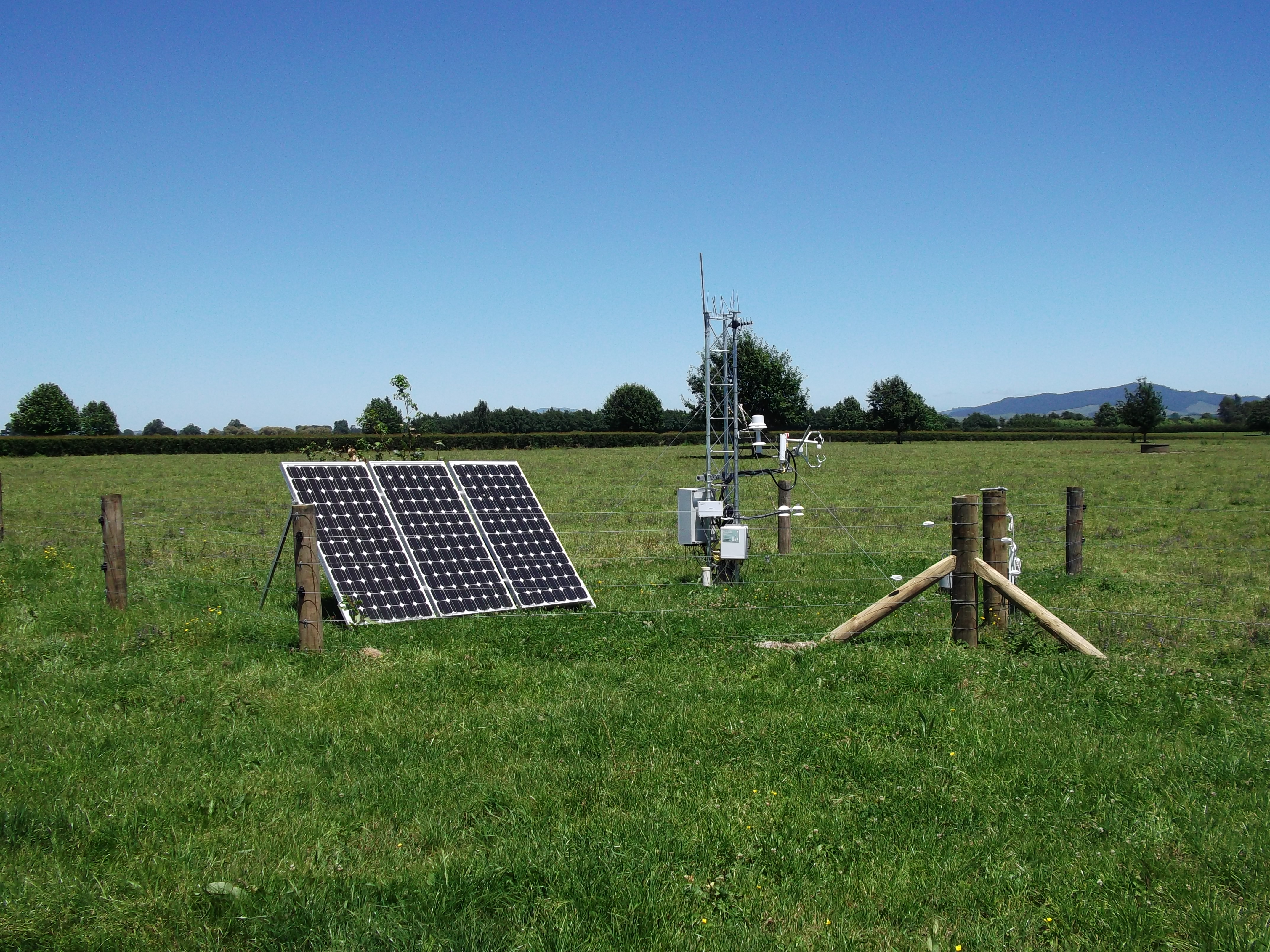
Eddy Covariance tower for measuring carbon dioxide exchange at paddock scales
Over the last decade+ we have measured carbon balances of grazed pastures at multiple sites using eddy covariance techniques. In the absence of disturbance, pastures seem to be at steady state with some small gains and losses from year to year.
Wall, A.; Laubach, J.; Campbell, D.; Goodrich, J.; Graham, S.; Hunt, J.; Mudge, P.; Whitehead, D.; Schipper, L. (2024) Effects of dairy farming management practices on carbon balances in New Zealand’s grazed grasslands: synthesis from 68 site-years. Agriculture, Ecosystems, and Environment. 367: 108962.
Supplemental feed production

When used for production of supplemental feed (e.g., maize, turnips, kale) there are losses of carbon associated with lack of photosynthesis during establishment and harvest times. The size of carbon loss seems to scale with the amount of feed removed. When grazed on site (e.g., turnips) there are carbon returns through dung inputs.
Wall, A.M.; Wecking, A.R.; Goodrich, J.P.; Pronger, J.; Campbell, D.I.; Morcom, C.P.; Schipper, L.A. (2023) Paddock-scale carbon and greenhouse gas budgets in the first year following the renewal of an intensively grazed perennial pasture. Soil and Tillage. 234, 105814.
Wall, A.M.; Goodrich, J.P.; Campbell, D.I.; Morcom, C.; Schipper, L.A. (2023) The carbon balance of a temperate grazed pasture following periodic maize silage cropping depends on climate and management. Agriculture, Ecosystems and Environment. 352, 108523. DOI: 10.1016/j.agee.2023.108523
Wall, A.; Goodrich, J.; Ray, S.; Campbell, D.; Schipper, L. Periodic cropping of pasture for summer-grazed turnips leads to substantial carbon loss. (2025) Agricultural and Forest Meteorology Journal
 WaiBER